Our Method
What if reducing your fire risk also brought back water, cooled your summers, and raised your property value?
It’s called ecosystem restoration. It’s the root-cause solution to extreme weather. And it works.
The Old Way
You’ve been told to clear-cut everything within 100 feet and replace it with gravel. That makes your property unbearably hot, kills the soil, and increases long-term risk.
Strips away nature’s own firebreaks
Kills soil biology so nothing grows back healthy
Bare ground heats up fast — makes everything hotter
Gets worse over time, not better
The TMRW Way
We work with nature, not against it. Strategic restoration with native fire-resistant species, healthy soil that holds water, living firebreaks that cool the air.
Native fire-resistant species that create natural barriers
Healthy soil retains water and resists ignition
Living canopy cools the air and slows fire spread
Gets better over time — a system that strengthens itself
The Cascade Effect
One action triggers a chain reaction.
Restore the ecosystem, and everything downstream improves. These aren’t hypothetical — they’re documented.
Fire risk drops
Native plantings create natural firebreaks. Healthy soil resists ignition. Living landscapes slow fire spread.
Groundwater comes back
Healthy roots let rain soak deep instead of running off. The water table recharges. Wells and springs recover.
Rain patterns normalize
Restored landscapes actually influence local rainfall — reducing storm intensity and bringing back regular, gentle rain cycles. The science is clear.
Streams return
Creek flows increase. Riparian corridors heal. Fish and wildlife come back.
Your area cools
Restored canopy and transpiration lower air temperature by degrees. Fewer extreme heat events.
Property values climb
Green, resilient communities attract buyers and retain value. Insurance becomes easier to get, and cheaper.
Your Home’s Value
Fire doesn’t just burn. It erodes value for years.
The damage isn’t just what burns. Proximity to fire permanently changes what your home is worth.
−10%
Homes near a wildfire lose ~10% of their value
Mueller et al., J. Real Estate Finance & Economics, 2009
−23%
A second fire in the same area drops values another 23%
Mueller et al., J. Real Estate Finance & Economics, 2009
$2–7.5K
less appreciation per year on a $500K home in fire-prone areas
PLOS Climate, 2023
+3–12%
price premium for homes with weather-resilient features
Zillow, 2023
Prevention doesn’t just reduce risk — it protects what your home is worth.
Proof It Works
This isn’t theory. It’s already happening.
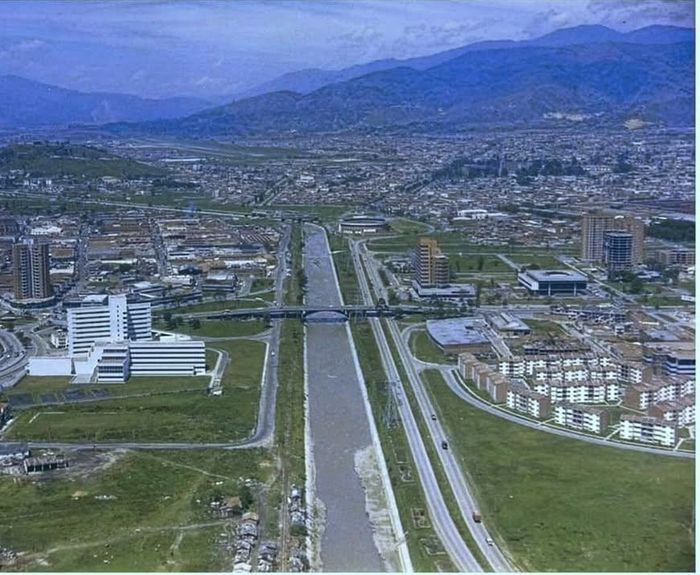
Medellín, 2016
Medellín, 2019
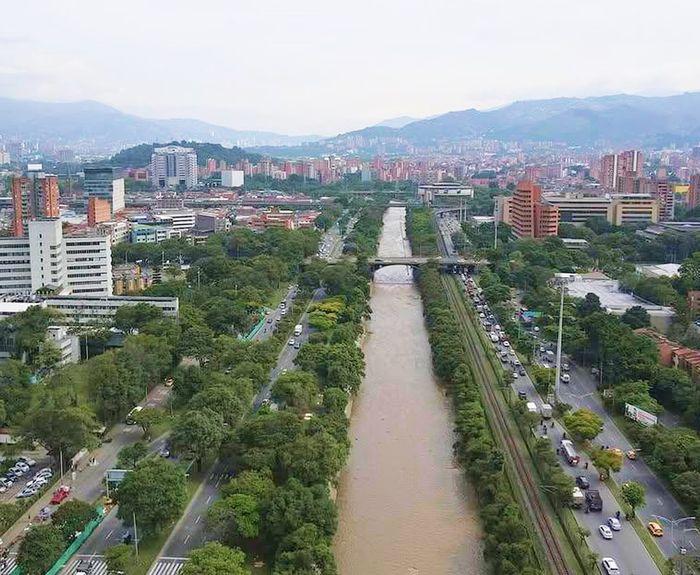
30 green corridors. 4°F cooler. 3 years.
Medellín planted 30 green corridors through the city — restoring native vegetation along roads and waterways. In three years, the city cooled by 4°F. Respiratory illness dropped. Biking increased 35%. And the city became more resilient to heat, storms, and floods.
Sierra Nevada, CA
UC Berkeley’s 20-year study confirmed: forests treated with ecological restoration are far more resistant to catastrophic wildfire than untreated areas.
Goleta Riparian Corridor
10 priority restoration sites designed to reduce wildfire risk while restoring watershed function. Models show up to 42% reduction in property losses.
Ojai Meadows Preserve
270+ acres of invasive arundo removed since 2007. Highway 33 flooding fixed. Steelhead trout and red-legged frogs returning to restored creeks.
The Numbers
The smartest investment you can make.
$6–13
saved per $1 spent on hazard mitigation
NIBS / FEMA, 2019
$10.50
in benefits per $1 invested in weather resilience
World Resources Institute, 2025
$15
return per $1 on nature-based disaster risk reduction
UNEP, 2021
50–90%
localized risk reduction with the right interventions
Sudmeier-Rieux et al., Nature Sustainability, 2021
Your AI Advisor
An ecologist, hydrologist, and fire scientist — on call 24/7.
TMRW’s AI advisor already knows your parcel boundaries, soil type, slope aspect, vegetation history, local fire history, watershed position, and microclimate. It runs fire behavior models, hydrology simulators, and species suitability algorithms in real time — so every answer is specific to your property, not generic advice.
Ask it anything. “Should I remove that eucalyptus?” “What’s the cheapest thing I can do with the biggest impact?” “What happens to my risk score if I plant native ground cover on the south slope?” It gives you options, runs the numbers, and shows you what changes. In any language.
Is it safe to remove the eucalyptus near our fence? My neighbor says they provide good shade.
Great question. Eucalyptus are actually one of the highest fire-risk trees — their oil-rich bark and leaves are highly flammable and can throw embers hundreds of feet.
I’d recommend replacing with a coast live oak — same shade, deep roots that stabilize soil, a fraction of the fire risk, and it supports local wildlife. Want me to add this to your plan?
What about cost?
Eucalyptus removal runs $800–2,000 depending on size. A 15-gallon coast live oak is ~$150. There’s a Ventura County rebate that covers up to 50% of native tree planting. Want me to check your eligibility?
Your restoration plan includes:
Ecosystem Restoration
Replace eucalyptus with native coast live oak
Restore native ground cover on south slope
Build rain garden for stormwater infiltration
Building Hardening
Install ember-resistant attic vents
Upgrade to Class A fire-rated roofing
Defensible Space
Create 5-foot non-combustible zone at foundation
Manage vegetation spacing in Zone 1 (0–30 ft)
Ecosystem restoration is the foundation. But we don’t stop there.
TMRW also advises on building hardening, defensible space, ember-resistant vents, fire-safe landscaping — the full picture.
Every plan is specific to your property. And you always get options — we show you what to do first, what has the biggest impact, and what it costs. You decide.
Common Questions
Questions we hear a lot.
Your landscape is ready to work for you. Start here.
Enter your address. See what’s possible for your property.